22:30: After work, I typically check the news. This article about the governor renaming the Nashville airport after Dolly Parton caught my eye.
01:00: I come across fake news on Twitter (X):
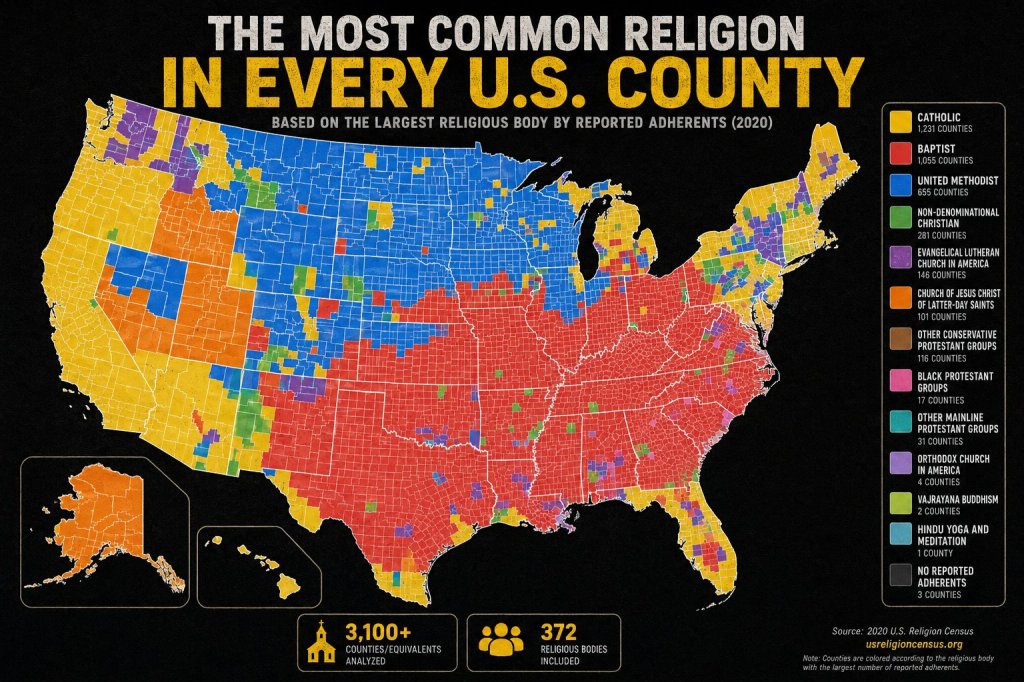
In this post, the county lines do not align with actual county lines in the United States, and the image was obviously fabricated with AI. I am a huge geography nerd, so I like to look at maps, and that’s what my algorithm sends me a lot of. This map is wildly inaccurate. The county I live in isn’t even accurately portrayed on this map, and even if it were, the religion it says is predominant in this region is inaccurate. It took very little effort for me to fact-check this post because of my knowledge of geography that I already have.
02:00: Before getting ready for bed, I scrolled through Twitter and found a really fascinating post about lumber production in Japan:
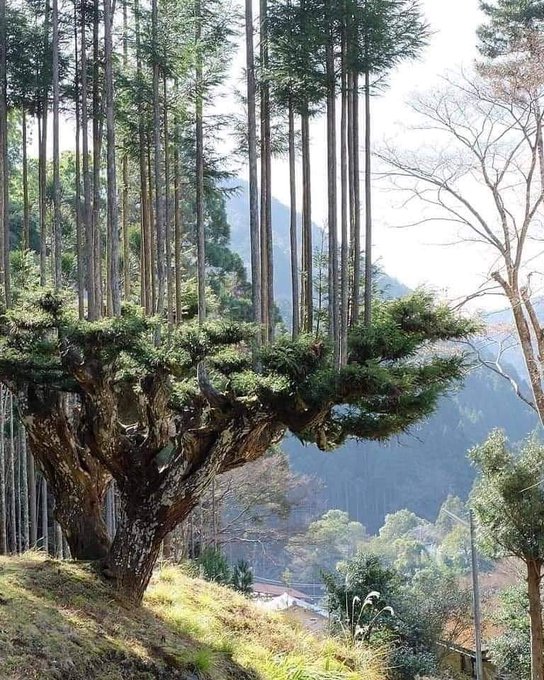
The post explains Daisuigi, an ancient Japanese forestry technique developed in the 14th century. Basically, they planted cedar in such a way that it would produce shoots in straight, perfect, knot-free lumber. Then cuttings are taken from those shoots once every two years. Very clever! It allows for wood cuttings to be taken from trees without cutting them down completely.
10:00: I wake up and check my alerts from Google, and this fascinating post on the Chernobyl exclusion zone catches my eye. I’m fascinated by geography and science stories! It explains how wolves live at seven times the density they do outside the fallout zone from the infamous nuclear disaster inside the fallout. Other animals such as wild boars, elk, and deer were also found in higher numbers there. The story proves that the contamination from the radiation there is less afflicting to wildlife than the practices of humans nearby, such as agriculture, forestry, and hunting. I am drawn to any story about the former Soviet Union and any story about science or geography, so the algorithm knew this would be right up my alley.
11:00: I see another story from the BBC that catches my attention. It is about Vienna’s Globe Museum, and how it charts human understanding of the world throughout history through the stories different globes throughout time tell us. As you can tell, I just adore geography!
12:00: Around noon, while I was eating lunch, I came across this story about one of California’s oldest ranches, which has 14,177 acres that are soon being opened to the public. It’s exciting to me to see more public lands available, and it looks gorgeous, so I hope to visit someday. I’m also shocked by the low price of $15.5 million!
21:30: I am off work, and I check my news alerts again and read this terrible story. Another one of the concerns that appears often on my algorithm is stories about climate change, and this one is a doozy. Catastrophic flooding in China and Nepal has led to over 900 deaths, while 4,700 more people remain missing.
22:30: I check YouTube and see a notification about the tropics: Gulf Watch: Tropical Storm Edouard could form to start the week, impacting Texas and Louisiana
Tropical Storm Edouard could form and impact Texas and Louisiana sooner rather than later. This story is a big disappointment, because the storm is predicted to hit east of where I live, where we need the rain, and hit areas that can’t handle the flooding.
Conclusion
I saw less questionable content than I expected during this activity, yet I’m also unsurprised by that because I don’t typically view stories from questionable sources, and my algorithm doesn’t feed me them very often. There are outlets, such as Fox News or Newsmax, that I am more inclined to fact-check than others, because in my personal experience they have a historical record of posting facetious information. I do not read or engage with stories from those sources, so I rarely see them.


Leave a Reply