Scrolling through social media, it is easy to see a graphic from a recognizable news organization and assume that it must be legitimate. One example that caught my attention was an image circulating online that appeared to come from Fox News. The graphic claimed that President Donald Trump had issued an executive order imposing the death penalty on Lindsay Clancy, a Massachusetts woman whose murder trial recently ended in a mistrial. Reuters investigated the image and ultimately determined that the graphic was fabricated.
What interested me was not just whether the claim was true or false, but how someone could figure that out for themselves. I decided to approach the claim using the SIFT method: Stop, Investigate the source, Find better coverage, and Trace the claim to its original context.
Step 1: Stop and think before sharing
My first step was simply to stop. The graphic makes an extraordinary claim involving the president, an executive order, and the death penalty. That alone should make me hesitate before sharing it. I also noticed that the claim was presented as an image rather than a direct link to a Fox News story. A logo and professional design can make something appear credible, but those elements can also be copied or manipulated.

Step 2: Investigate whether Fox News actually published it
Instead of examining every pixel of the graphic and trying to decide whether it “looked” real, I would leave the original post and investigate the supposed source. I would search Fox News and Google for the alleged announcement.
This is where lateral reading becomes useful. If Fox News had actually reported that a sitting president ordered the death penalty for a particular person, I would expect to find the original Fox News report and coverage from numerous other news organizations. Instead, Reuters contacted Fox News directly, and a Fox News spokesperson confirmed that the image was not an authentic Fox News graphic.

Step 3: Find better coverage
Next, I would search for independent reporting about the claim. This is important because I do not want my conclusion to depend entirely on what one social media account or even one news organization says.
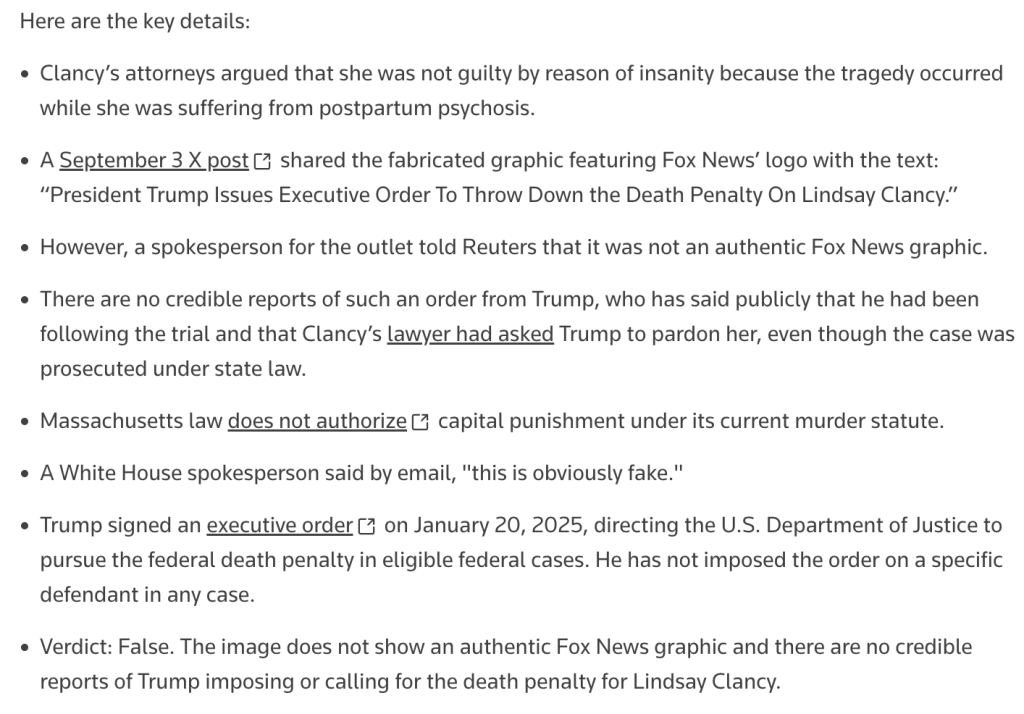
Reuters found no credible reports that Trump imposed or called for the death penalty for Clancy. The White House also told Reuters that the circulating claim was fake. Reuters ultimately rated the claim false.
There is also legitimate reporting about the actual Clancy case. Reuters reported on September 10 that her attorney asked the judge to find her not guilty by reason of insanity following the mistrial. That real reporting provides a much different picture from the viral graphic.
Step 4: Trace the claim and check whether it is legally plausible
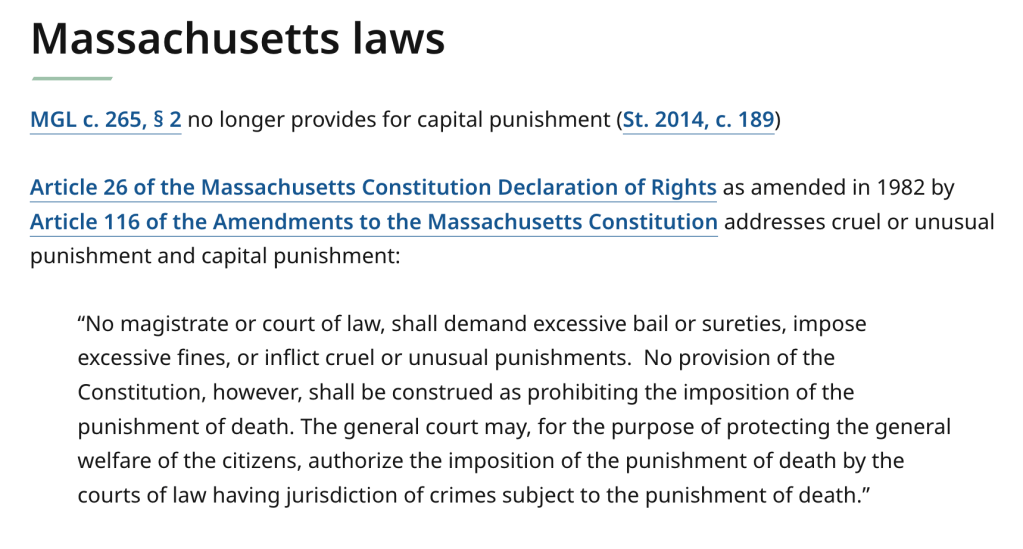
The next thing I would do is investigate the specific details of the claim instead of only searching for people saying it is false. Reuters traced the circulating image to a September 3 post on X. More importantly, Reuters checked the underlying legal claim and found another major problem: Massachusetts law does not authorize capital punishment under its current murder statute.
Reuters also checked Trump’s actual executive orders. Trump did issue an executive order in January 2025 directing the Justice Department to pursue the federal death penalty in eligible federal cases. However, Reuters found that he had not used that order to impose the death penalty on Clancy or another specific defendant. Clancy’s case was prosecuted under Massachusetts state law.
That distinction is especially important because the fake graphic takes something that sounds vaguely plausible—Trump’s support for the federal death penalty—and attaches it to an unrelated state criminal case.
Conclusion
After using SIFT and lateral reading, I would assess the claim as false. The conclusion does not depend on one clue. Fox News said the graphic was not authentic, Reuters found no credible reporting supporting the claim, the White House denied it, Massachusetts does not authorize the death penalty under its current murder statute, and the real executive order referenced in the surrounding discussion applies to eligible federal cases.


Leave a Reply